This is a MUST read for 2026. A brilliant biting critique on christian faiths that manipulate believers with falsehoods, especially in order to control women and do away with others who don’t fall within their circle of acceptable ways.
Devil of the Deep by Falencia Jean-Francois is an amazing Haitian, LGBTQIAP+, and feminist story of pirates, mermaids, and gods. It sets itself apart with lush world building, mythology and lore, and characters representing those who have found their stories historically pushed out of traditional publishing. This is a beautiful book and I would highly recommend it!
LGBTQIAP+ representation
Haitian culture & mythology
Critique of harmful belief systems
Feminist / Matriarchal
Betrayal, romance, swordfights
A pirates life for me please 🙂 🙂 🙂
Even though I read the eARC, I will absolutely be getting a physical copy to re-read!! (I don’t often re-read books)
Thank you to Left Unread & Bindery Books for providing this ARC for review consideration via NetGalley. All opinions are my own.
This dark and haunting masterpiece just absolutely barrelled itself into my book-loving heart and obliterated whatever poor soul had previously held the title of ‘the best book I’ve read in recent memory’. The way I became an obsessive unrecognizable creature absorbing this story, these characters into my veins as directly and swiftly as possible, while at the same time mourning the fact that I would never again be able to read this book for the first time.
Heba Al-Wasity sweeps us away with her beautiful, well-edited manuscript, her characters that burrow and nestle themselves in the dark corners of your heart, and a masterclass in creating atmosphere, depth, tension, anticipation, and feeling.
Being pitched as a gothic fantasy, this means pain, and no doubt there is suffering here. You will feel it, you will feel everything, and it climbs and it builds like a wave about to devastate the shores of a sleeping village, unaware of the beast about to change its entire world in one crash. I was that sleeping village. And I’m awake now.
Dear potential reader, I could summarize the plot and tell you about all of the poignant themes brilliantly laid bare for your consumption in Weavingshaw, but I promise that no matter what, once this book comes out, there will be severe FOMO for those who don’t immediately shell out what little value money has in the exchange of such a treasure.
* Gothic
* Political
* Demons
* Ghosts
* Mysteries
* A slow burn you will devour
Leena Al-Sayer can see the dead; this is her most severely kept secret. But when she needs to exchange it for the life of her brother in a deal that will threaten to upend her already fragile situation, she bargains with the Saint of Silence. Not a Saint but a haunting mystery, one that slowly unravels into madness, demons, ghosts, and dark corners of the world that might have been better left unturned.
The first book in a TRILOGY.
Recommendation: I’d recommend this book to anyone, everyone!
Additional compelling themes/commentary:
* Legacy – and what men will do/have done to maintain it. How self-important they make themselves and how monstrous…how they feel fit to make decisions of fate like gods for those they see as less than or in control of simply for greed.
* Exploitation – of the poor, the migrant, the refugee. How they are used and bled for the continued vitality of the rich and ruling class. How prison systems become businesses, profits before people…How ‘othering’ people makes it so easy to treat them as less than, to rationalize harming them.
* Secrets – even the smallest of these can change the course of a life.
* Family – and how sometimes the ones we love the most will move and shake our lives so violently we might find resentment haunting our relationships
* Fear & Control – and that maybe, just maybe we might be stronger than we think when it comes to fighting our ghosts.
Thank you to Del Rey for providing this ARC for review consideration via NetGalley. All opinions are my own.
Everything is turned up a notch in the second installment of the story of Anequs and Kasaqua! Politics, romance, new allies and dangerous enemies…once again Moniquill Blackgoose pens a piece of work that should be required reading for all.
To Ride A Rising Storm is The Second Book of Nampeshiweisit following To Shape A Dragon’s Breath. We pick up right where the first one ended and continue to follow the journey of Anequs, a young indigenous woman chosen by Kasaqua, the first dragon her island home of Masquapaug has seen in a long time. This is the story of them attending the colonizer’s dragon academy and facing the Anglish ways and customs, including standing up to those who would do away with her people altogether.
Review:
I requested the ARC of The Second Book of Nampeshiweisit because I absolutely loved the first book. And if you loved the first book, you will enjoy the second. It’s very much the same style and format as the first. The writing is consistent, pragmatic, and practical – just like Anequs. The pacing is measured and even until you reach the very last pages where it then explodes into chaos. Similar to the first book, my only critique is that there is a lot of info dumping at times.
One of my favorite parts of this book is the way the author weaves in stories alongside the main plot. Characters will sit down and listen to a story being told (which will last for a chapter) and it’s like finding myself around a campfire with friends and family while someone recounts a folk tale.
Again, as in the first book, much of the story is comparing the differences between Anequs’s culture and that of the Anglish (European-centric-esque). Book #2 explores more of the differences pertaining to romantic relationships especially and themes around courting, marriage, and family inheritances.
Recommendation:
Readers who want to take their time with a story, who want to read from the perspective of an indigenous woman navigating a world that is completely different than her own, and who love dragons! As I said for the first book, I would recommend this to be required reading.
The releasedate is January 27, 2026 so mark your calendars!
Thank you to Del Rey for providing this book for review consideration via NetGalley. All opinions are my own.
Henches, superheroes, sidekicks, and villains are back for round 2 in this long awaited sequel to HENCH #1 by Natalie Zina Walschots.
Plot Summary:
Anna and the crew at Leviathan are recovering from the events of Book 1 including the defeat of Supercollider there are some FEELINGS being dealt with. Working through this, they are taking on the Draft. Not a superhero but a super-corporation. And Anna meets her nemesis.
Review:
Being a newcomer to Hench #1 this year, I didn’t realize how long awaited this sequel was…and that the author mentioned having to start completely over about 4 times. Dates were pushed back and it sounds like the author had a hell of a time getting this one done. So, firstly thank you to Natalie for completing this project.
The first book came out in 2020 and a lot can happen in the years since then that the author would have been writing. She mentions herself that she isn’t the same person and Villain is definitely a very different book than Hench. We still have the same relative punchy fun writing style that layers in character development, clever plotting, and social commentary. But as things develop, different themes are explored more heavily and relationships between the characters get a bit messier.
I enjoyed the sequel overall and much of what I loved about book #1 was the same for Villain. That being said, I would check trigger warnings because the heat was definitely turned up a notch in this one. Both for content but also relationship development. I’m not a fan of poor communication and misunderstandings or assumptions (or really any kind of toxic nature) between characters when it comes to intimate relationships but this is a personal preference. There is a lot explored here around power dynamics and agency between people with strong feelings about each other. While it definitely is interesting to reflect on psychologically speaking, it wasn’t comfortable to read (not that books have to make us feel comfortable).
Once again though, I appreciated the diversity of Walschots characters like the first book and there is a lot of representation here. One of my favorite parts of this book is the plotting, the fallout, the scheming, the rebellion/rage against the machine disguised as cartoonic villainy. There is a lot of commentary and themes around social justice, corporations, evil masquerading as heroism.
I love the ending – Walschots is a pro at creating tension and sparking curiosity and the last page was no exception…so, will there be a book 3? I’m not sure this story is over yet but we’ll see.
“Natalie cultivates fandoms, builds new communities, develops character voices, leads interactive fiction workshops, designs alternate reality games, constructs branching narratives, and most mornings opens Tumblr before opening her eyes. Her client list includes scrappy indie game studios, critically acclaimed television shows, mixed martial artists, print magazines, talk shows, NGOs, and a few more that defy categorization.
tl;dr: free lance, writer, memesmith, bailed academic, nerd, gamer, metal head, SJW, world builder, supervillain.”
Hench by Natalie Zina Walschots is a hilarious, fun, and devious story about superheroes and villains where you might just side with evil on this one. I certainly did.
Plot Summary:
Anna is a low-level assistant to villains working temp jobs when she is seriously injured by the most famous superhero alive. While recovering from her injury, she ends up calculating the costs of damage done by said superhero and others like him. Suddenly she finds herself employed again and diving into the world of true villainy or is it heroism? And maybe the superheroes aren’t so super after all?
“Natalie cultivates fandoms, builds new communities, develops character voices, leads interactive fiction workshops, designs alternate reality games, constructs branching narratives, and most mornings opens Tumblr before opening her eyes. Her client list includes scrappy indie game studios, critically acclaimed television shows, mixed martial artists, print magazines, talk shows, NGOs, and a few more that defy categorization.
tl;dr: free lance, writer, memesmith, bailed academic, nerd, gamer, metal head, SJW, world builder, supervillain.”
Review:
I rated this book five stars and would recommend it to anyone who enjoys analyzing data and human psychology that feels like they might have a tiny villain inside.
The author hits on several themes surrounding good and evil as we would call it. How some people we put on a pedestal don’t live up to how high we have built them and how some people we condemn are the farthest thing from evil. And the costs of doing “good” can far outweight the good done and was any good done at all?
One of my favorite discussions that can be had from this book is that of the creation of a villain. How are villains made? And sometimes, are heroes to blame for the existence of evil? How careless acts can damage and how covering it up hurts even more…
At first, this book seemed all fun and games but then by the end, it became a cavern of depth. Heavy on the theme of collateral damage of “doing good”. There was a lot of development of the themes, of characters, of plot action, and suddenly I was so invested, I was figuratively biting my nails until the last page.
I very much enjoyed the found family formed but make it villain. There’s also an aspect of how success can create a space for jealousy and the loss of a former life and contacts.
I was buckled in for the ride on this one and I CANNOT WAIT to start reading the ARC for the next installment, VILLAIN – coming out May 2026.
I read this book as part of the Fantasy Finishers Book Club on Fable and I’m so glad I did. Although I will issue a specific trigger warning (see bottom of this post, warning – it’s a spoiler) along with general content warnings.
Surprisingly, this is the first book I’ve finished by Tasha Suri although I do own The Isle in the Silver Sea and started The Jasmine Throne last year.
I am NOW going to need to fast track ALL of her books.
Tasha’s writing is so so good.
Official Synopsis:
“The Amrithi are outcasts; nomads descended of desert spirits, they are coveted and persecuted throughout the Empire for the power in their blood. Mehr is the illegitimate daughter of an imperial governor and an exiled Amrithi mother she can barely remember, but whose face and magic she has inherited. Unbeknownst to her, she can manipulate the dreams of the gods to alter the face of the world.
When Mehr’s power comes to the attention of the Emperor’s most feared mystics, she is coerced into their service, as they are determined to harness her magic for the glory of the Empire. She must use every ounce of will, subtlety, and power she possesses to resist the mystics’ cruel agenda — and should she fail, the gods themselves may awaken seeking vengeance…”
Author’s Official Bio:
Tasha Suri is the World Fantasy Award winning author of The Isle in the Silver Sea, The Burning Kingdoms Trilogy, The Books of Ambha Duology, What Souls Are Made Of and Doctor Who: The Cradle. Once a librarian, she is now a part-time writing tutor and a full-time cat and rabbit wrangler. She lives with her family in a mildly haunted house in London.
Review:
I love the world that Tasha Suri builds in this first installment of The Books of Ambha Duology. There is a map that looks like India split into various parts of the Empire. It’s very much a story of colonialism/imperialism and opression with a central ruler. Within this story, there’s also both religious and political imperialism that are closely tied to each other.
It’s rich in both character development, world building, and plot action. The concept of choice is central to the plot and I enjoyed how in depth the author explores this. Is choice an illusion or something that we can still maintain control over despite others trying to take it away from us?
The writing is well-crafted, smart, and elegant.
I would recommend this book to any fantasy reader although please check the trigger warning discussion below first if you don’t want to read about situations where choices are taken away especially from women.
Trigger warning – SPOILERS >>> a large part of this book follows a situation where a woman’s right to choose is taken away from her and she must “wed” a man she (Mehr) hardly knows. The Empire is forcing her into this and she chooses it to save her family or it’s likely they will all be killed. Her new husband Amun is also essentially a slave to the Empire and controlled by the “religious” authority. This “religious” authority tries to force them to consumate the marriage because then it will give him ultimate control over Mehr as well. Through the magic system in place. Mehr and Amun are able to avoid this for a while but then the Maha (the religious authority) finds out and tries to force them to do it in front of other people for proof. By this point they have fallen in love though and they do consumate the marriage (but not in front of others). This was hard for me to read at times because of the constant threat of sexual violence, lack of choice, and being forced to do something both Mehr and Amun do not want to do.
This situation twisted my stomach. It hangs over their heads for a lot of the book. I was able to press on because although it was always lurking in the shadows, it wasn’t front and center for most of the book. And in a way, it still remains their choice in the end because I’m sure they would have killed themselves if they didn’t want to do it. Still pretty twisted and sickening and evil situation they find themselves in, which does reflect much of the world and the violence inflicted on women by men especially by the removal of their choices.
It’s a very interesting book and I rate it quite highly at the moment.
In 15th-century Volterra, sculptress Ravenna Maffei enters a competition hosted by a secretive, immortal family who offer an invaluable boon to the victor. Desperate to win so she can save her brother, Ravenna reveals a rare magical talent—a dangerous act in a city where magic is forbidden.
Her revelation makes her a target, and she is kidnapped by the Luni family and taken to Florence, a city of breathtaking beauty and cutthroat ambition.
There, Ravenna is forced into an impossible task where failure means certain death at the hands of Saturnino dei Luni, the family’s enigmatic and merciless heir. But under his cold reserve hides a vulnerability that draws her closer than she ever intended.
Meanwhile, Ravenna’s forbidden magic does not go unnoticed. The Pope, waging war against Florence, the Medici, and magic itself, has his own interest in her abilities, seeing her as a potential weapon in his ruthless campaign.
As alliances shift and war brews on the horizon, Ravenna must navigate the treacherous line between survival and betrayal, between love and duty. With time running out and her every move watched, the choices she makes will determine the fate of not just her own life, but the fragile balance of magic and power that could unravel Florence itself.
Review:
Our main protagonist in Graceless Heart by Isabel Ibañez is Ravenna, a innkeeper and secret sculptor living in Italy around the time of the Renaissance. She does something reckless to save a family member and ends up in a dangerous situation. In a world where magic is outlawed and seen as something vile, she wrestles with her own gifts and feelings of worth and self-acceptance.
As this is billed as a “a gorgeous, historical, and romantic fantasy”, there is a tall, dark-haired, handsome man in the picture with a beautiful face. We know his face is beautiful because it is mentioned over and over and over again. And even though he isn’t nice at all initially, our heroine (despite being angry and wanting to stand up to him) cannot resist, especially when he says, “Good girl.”
This is not a romantic fantasy – this is a fantasy romance. And I had hopes that I would really enjoy this book based on the premise but that sentiment turned around within the first few chapters. Instead of being more fantasy focused as the synopsis suggested, I found it romance trope focused with the rest of the elements left to fade into the background. When I saw the phrase “Good girl” thrown in, if it wasn’t an ARC, it would have been an immediate DNF. This is so icky and creepy to me and it’s romanticized and fetishized but is degrading to women given everything loaded behind it. This is one of those romances where the heroine is supposed to be independent and strong but falls apart in seconds of a ‘beautiful’ man coming into sight or stepping close to her. No, thank you.
The style feels very similar to Y.A. rather than Adult so this surprised me given it’s marketed under Adult. Writing is a bit jumpy especially in dialogue (also just feels generally wierd to me in the way that Ravenna and CS talk to each other). Descriptions were also very figurative but in way that didn’t make sense or a bit over the top. Overall, it felt a bit cliche and trope-y (if that’s a word) to be honest. It’s also incredibly repetetive.
The premise held a lot of promise but delivered something else entirely. Absolutely 100% not for me. I’m also not a fan of authors who don’t include readers in their acknowledgments.
Who would enjoy this book: readers who enjoy tropes and fantasy romance or romantasy with human v immortals vibes based in Italy.
Thank you to NetGalley for the ARC copy of this book in exchange for an honest review.
Starseekers by Nicole Glover is a fun adventure full of magic, cleverness, murder, mystery, friends, family, and of course, villains.
The book’s synopsis leads with:
“Indiana Jones meets Hidden Figures in this brand-new stand-alone historical fantasy set in the world of The Conductors, in which the space race of the mid-20th century will be determined by magic…if not murder.”
Release date: January 2, 2026
Summary: It’s the 1960s and there’s a space race on for the moon. Cynthia Rhodes is a brilliant engineer at NASA and talented celestial magic user who happens upon the beginning of a mystery when a cursed stranger shows up at the local TV station her cousin runs while she is filming an educational magic show with her friend Theo, a professor of arcane archeology. Soon after, there’s an accident and potential sabotage at NASA involving a coworker that could be connected.
Theo and Cynthia jump into solving the mystery but it’s not just them. Joining the journey are Cynthia’s younger sisters, her friends, cousins, and other family members. Suspects pop up left and right as they continue to hunt down clues and chase danger like it’s second nature. Because it is.
The story follows the same family tree as the author’s other works including The Conductors and The Improvisers – also magic & mystery stories. Sleuthing is in the family!
Thoughts: Overall, this book is quite fun but it also includes themes of racism and the civil rights movement. It’s lighthearted banter, blooming romance, lots of action and magic intertwined with reminders of racial violence and discrimination of the time period the story is written in.
I really enjoyed this and found myself thinking within the first 25% how much fun this book is going to be. It’s unique in itself although the comparables reference Hidden Figures and Indiana Jones. I’d add in a bit of Enola Holmes in there as well.
Glover created quite a web of relationships both within the Rhodes family and outside that felt like it we didn’t have just two main characters but a whole crew working together by the end to solve the case. This gave the story a lot of depth in terms of relationships.
Starseekers is a fast-moving plot which has plenty of time for action and interaction between characters, but it doesn’t dive too deep into character development. This book is definitely for those that enjoy great characters without dramatic development arcs but also a plot that moves. There are a number of different components to the mystery to keep readers guessing until the reveal.
One of my favorite components of this story is there aren’t many limits places on the characters. They are able to do pretty much anything they want. The magic used is only limited to how fast they can react and cast spells. I enjoyed this as it gave a sense of autonomy and power to the characters.
I would recommend this book to anyone who enjoys any combination of fantasy, sci-fi, and mystery. As someone who reads these genres exclusively at the moment, it was a perfect mix of elements.
This book should be recommended reading in schools. And for all, frankly.
I’ve seen quite a few reviews mention that this book is “slow” and there’s “not much going on (action)” and I would refute that claim. There’s A LOT that happens in this book. We follow the main character Anequs as she navigates being the first in a long time to be chosen by a dragon (something her people thought was long lost) and being forced into the colonizer’s world after they threaten her, the dragon, and her people. Since of course, they “regulate” all dragons and the people who are chosen by them.
If this story doesn’t incite rage within you, there’s a problem. There is A LOT of juxtaposing colonial ways and culture and rules with the ways of the people on the island of Masquapaug, where Anequs is from.
I adored the character of Anequs, she is strong and straightforward and stands up for what’s right consistently. If you despise the way many heroines are written in popular mainstream fantasy stories these days, this book is for you.
About the author (this is from her media blurb):
“Moniquill Blackgoose began writing science fiction and fantasy when she was twelve and hasn’t stopped writing since. She is an enrolled member of the Seaconke Wampanoag Tribe, and a lineal descendant of Ousamequin Massasoit. She is an avid costumer, and an active member of the steampunk community. She has blogged, essayed, and discussed extensively across many platforms the depictions of Indigenous and Indigenous-coded characters in sci-fi and fantasy. Her works often explore themes of inequality in social and political power, consent, agency, and social revolution.”
In another interview, the author explains more about the setting of the book:
JJ: Where does your novel take place, and how is the protagonist of your novel different from most mainstream fantasy protagonists?
MB: To Shape a Dragon’s Breath takes place in southern New England (Rhode Island, Massachussetts) in the 1840s in a very alternate timeline — the Roman Empire never existed, the British Isles were settled by Scandinavian seafarers, and the European colonization of the east coast of the US is proceeding differently. Also, there are dragons.
In the same interview, she says, “One of my greatest goals in telling Anequs’ story is to get the readers to comprehend how fundamentally different the European/colonialist perceptions of the world are from the Indigenous perceptions.” On the other side of this intention as a reader, the author has accomplished this and it is the focus of the novel.
There is a lot of info-dumping in this book and perhaps this can make readers feel like the pacing is slow but it does lay the groundwork for the future. This is perhaps my one critique of the writing style, perhaps the info-dumping might have been more spread out or worked into the story a bit more.
Although, a counter point, Anequs is in school and much of the info-dumping comes during lectures so it does invoke the feeling of actually being in a lecture, sharing the perspective and experience of the main character.
Overall, I would highly recommend reading this book, and a close reading at that. It’s one of the most important stories that needs to be heard and told. It’s beautiful, measured, heartbreaking, enraging, and one that I will be thinking about and recommending for a long time.
Book 2 is also coming out in 2026 and I have the ARC from NetGalley so stay tuned for updates on that!!
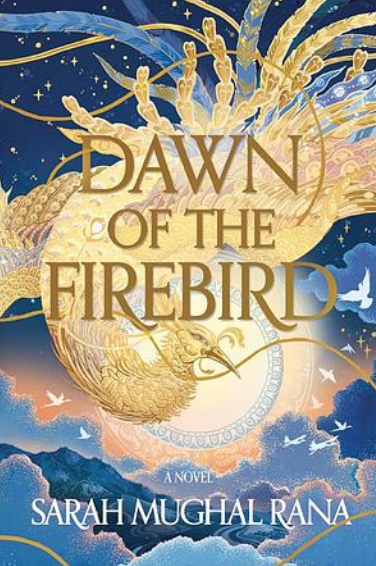
For fans of The Poppy War, She Who Became the Sun, and The Will of the Many, a breathtaking fantasy novel about the daughter of an overthrown emperor from an exciting new voice
Khamilla Zahr-zad’s life has been built on a foundation of violence and vengeance. Every home she’s known has been destroyed by war. As the daughter of an emperor’s clan, she spent her childhood training to maintain his throne. But when her clansmen are assassinated by another rival empire, plans change. With her heavenly magic of nūr, Khamilla is a weapon even enemies would wield—especially those in the magical, scholarly city of Za’skar. Hiding her identity, Khamilla joins the enemy’s army school full of jinn, magic, and martial arts, risking it all to topple her adversaries, avenge her clan, and reclaim their throne.
To survive, she studies under cutthroat mystic monks and battles in a series of contests to outmaneuver her fellow soldiers. She must win at all costs, even if it means embracing the darkness lurking inside her. But the more she excels, the more she is faced with history that contradicts her father’s teachings. With a war brewing amongst the kingdoms and a new twisted magic overtaking the land, Khamilla is torn between two impossible choices: vengeance or salvation.
My Thoughts:
Dawn of the Firebird is an epic fantasy about vengeance, betrayal, love, determination and war.
This book wrecked me by the end. And I can’t wait for the next one! There will be a next one right? RIGHT???
Run, don’t walk, to grab the pre-order since this book comes out December 2, 2025!!
I can’t believe I have to say this but I know it’s probably necessary…THIS IS NOT A ROMANTASY. This book is for the epic fantasy lovers that want to embark on a dark and devastating journey. And this is why I LOVED it so much. I am not a Romantasy fan any longer (never was that much) and I really want more fantasy books like this one written by women with main characters who are women that explore SO MUCH MORE than romantic love and centering men (ew).
POV: First Person, Single POV
World-building: The story is based on islamicate lore per the author. This refers to the culture/society associated with Islam and Muslims but not the religion itself.
‘Islamicate’ would refer not directly to the religion, Islam, itself, but to the social and cultural complex historically associated with Islam and the Muslims, both among Muslims themselves and even when found among non-Muslims. [Venture I:58-59]
There is a glossary on the author’s website that shows how extensive the world-building is. It might sound familiar to other works including The City of Brass or The Stardust Thief in terms of the lore, however I can tell you it’s a unique take. It’s wonderfully extensive and complex.
Magic system: The author describes this as anime x jinn inspired. Many pages are dedicated to sparring/fight scenes (both where magic is used and not) that are well written and easy to follow the detail of each action. I never enjoyed fight scenes that much before but this book – wow!
Without giving away spoilers, I’ll say I really enjoyed the magic system and the possibilities that are revealed to the reader as the book goes on.
Sarah Mughal Rana is an MPhil student at the University of Oxford, studying at the intersection of economic policy and human rights. Beyond the page, Sarah co-hosts the On The Write Track podcast, where she spills the tea with bestselling authors. Her short fiction has appeared in several anthologies. When she’s not writing, you can find her diving into history rabbit holes or honing her skills in traditional martial arts. Sarah is the author of the YA title Hope Ablaze. Dawn of the Firebird is her debut fantasy trilogy for adults.
FYI – There will be a TV SHOW coming which will focus on a prequel story to the book with Jabal entertainment.
General thoughts/impressions:
One of the reasons I loved this book so much is that ultimately it’s about love and morality, but it doesn’t solely focus on one type of love such as romantic love. It encompasses many different relationships between the characters, parents-children, siblings, fellow students/soldiers, teachers, community, etc. It’s beautifully crafted and comes together at the end to leave readers staring at the wall for hours wondering how ever will they recover from this…
This is an epic and appropriately extensive in terms of relationships, communities, peoples, cultures, beliefs, etc. I realllllllly hope this is at least a duology or trilogy because it definitely felt like this was only the first saga of more to come.
The book explores much of war and how it impacts people but more specifically how propaganda and belief can be used to manipulate. Our main character ends up having experiences on each side of the war in the book so she sees the different perspectives and realizes that it’s not black and white as she initially was taught. Teaching one world to view the other side as the enemy of course makes it easier to destory them. But when we come to know the enemy, roles are reversed.
The author’s studies at Oxford regarding the intersection of economic policy and human rights. These topics are baked into the book, which makes it a dark and intense read but absolutely a journey worth taking.
This isn’t a happy story, it’s human. It’s emotional, haunting, and beautiful. It reflects humanity is many ways and both the love we may experience but also the fear and horrors especially in times of war or when greed of men destroys.
One of the most well done elements is strategy. It’s clever and engaging and I’ll say no more so as to not give anything away!
Initially, I wasn’t too sure about the main character but I loved her by the end! I believe this might be what is called an unreliable narrator which I find fascinating because we never truly can trust the ground on which we stand and for me, that makes the book more interesting to read. There are a lot of elements of psychology and memory and trauma that are explored with this character here as well as the darkness that accompanies the human mind in turmoil.
As you can tell, there is A LOT to say about this book, it’s one to get stuck in and the journey is absolutely worth it.