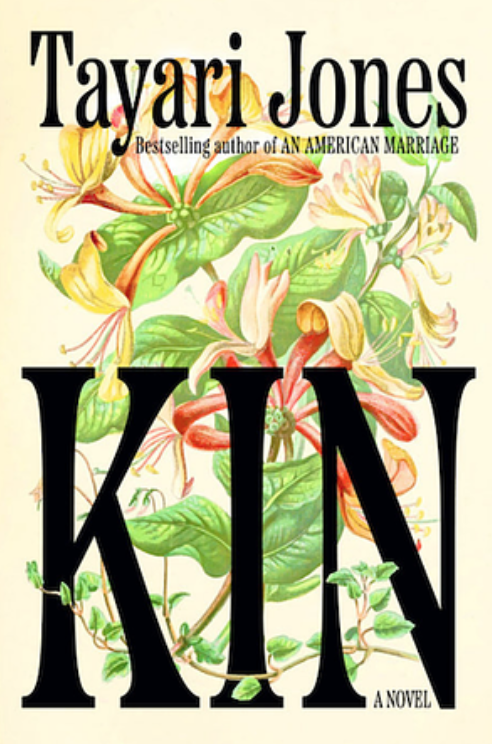
I know this story will be one that I think of often in the future and as usual, my thoughts and reflections will change over time the more I think about it. They are still a bit all over the place when it comes to this book. But for now, here is my current spoiler-free thoughts and review:
Plot Summary:
Kin by Tayari Jones is a story that follows two friends from Louisiana, Vernice and Annie, as they grow up without their biological parents into young women in the Jim Crow South/Civil Rights Movement era.
You may have noticed this blog is usually about fantasy, sci-fi, and horror novels but I also read non-fiction as well as other literary fiction such as Kin when it’s something so highly recommended I cannot ignore. Or I think it’s a story/perspective/history that’s important to read. Kin was in both of these buckets and I heard a lot of folks saying it will be a classic in the future or is a “contemporary” classic now.
Vernice and Annie grow up together as best friends in a small town in Louisiana. However as they get older, their circumstances and choices take them in two completely different directions and states within the South. They stay in touch via letters which are included as part of the narrative.
I believe that makes this a partial epistolary novel? Most of the book is told in narrative style but then there are letters sprinkled here and there.
Vernice and Annie each move through their own life experience (jobs, college, relationships, emergencies, hardships, racism, sexism, violence, joys, love, friendships, loss, classism, difficult choices, and so on) but keeping in touch with each other throughout. I won’t say more to avoid spoilers but I can say what’s on the cover/book slip that “their worlds collide in the face of a devastating tragedy.”
Before I dive into different themes in the book, I want to say this is one of the most beautifully written books I’ve ever read. The writing style is flawless. It’s gorgeous. It’s both heartbreaking and hilarious, dark and light, horror and joy each holding space side by side…
Mothers/daughters: A lot of time in this book is dedicated to the perspective and experience of growing up without a mother as a poor young black woman in the South. What life is like and what opportunities there were (and weren’t). And for Vernice and Annie, perhaps how the way that a mother isn’t part of their lives can sit in the mind and affect choices in different ways. Things that we know at the beginning of the book: Vernice’s mother was killed and Annie’s mother left. So throughout the book, we see how this weighs on and affects each girl/woman differently even though they both grow up similarly without their mothers, raised by an Aunt or Grandmother. KIN also touches on how people seek and fulfill roles that maybe someone grew up without or for whatever reason, doesn’t have in the present. “Found family” if you will that can enter into those spaces left by others to fulfill different needs. Whether or not the found family relationships are loving/healthy…
Vernice and Annie face the racism, sexism, misogyny, classism, and homophobia of Jim Crow South. KIN shows the horrors of this through their perspectives and how people keep on going.
It also led us through what happens when someone accepts what society is telling them to do or how to be, (how hard the choice is to go against the grain), even though it’s not necessarily what they would be happy with, and how that hurts them and others. And this is one part that was sad to me, even though I understand the author’s choice of how things happened. But I certainly didn’t like it. I want to read stories that flip the script and this one didn’t. But that is my personal wish. I think it’s also important to sit with things that don’t go the way you’d like them to and feel as much as you can what that experience might have been like for that person. And even though it’s fiction, KIN sits with what women went through and doesn’t shy away from the impact of what the realities were.
Dang, it’s hard to talk about this book without spoilers!
KIN shows us a glimpse of life in the South for young black girls and women during the time it was set and all that that meant for them. It’s a powerful narrative with a beautiful writing style that perhaps feels a bit sudden and rushed at the end. It feels like a slow buildup of impending doom until the last 15% or so. I found myself hoping that what I was thinking would happen wouldn’t happen and when I realized that the direction taken wasn’t reversing…it was sad.
I would highly recommend picking up a copy. Vernice and Annie’s stories will definitely be in my mind for a long time yet but I might rewrite the ending for them there. And for one other character in particular that I wished could have seen more happiness who was treated quite poorly.
P.S. of course the men in this book pissed me OFFFF! UGH.
Check trigger warnings as always.